
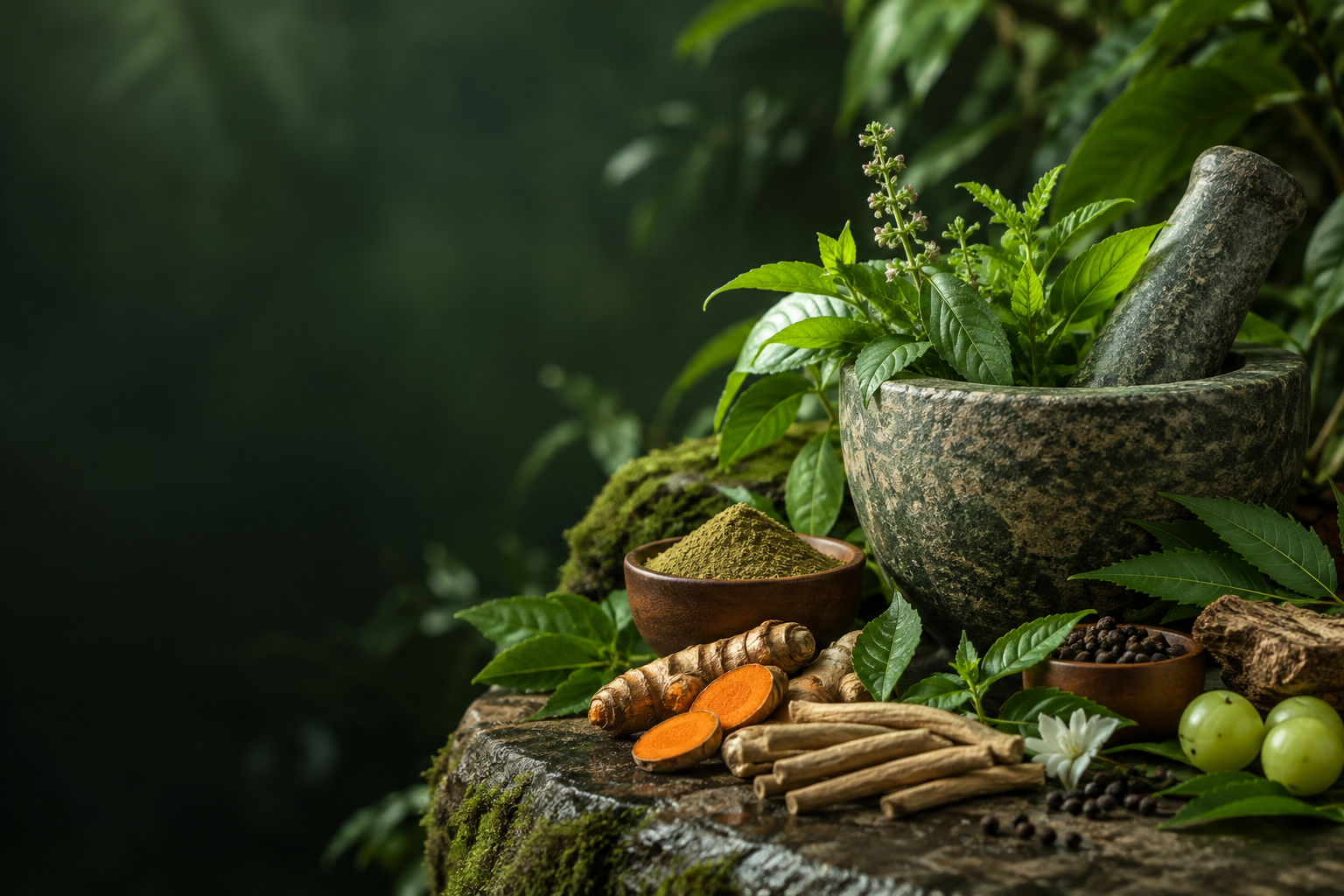
Evaluate each formulation on its own evidence, quality and safety.
A tradition of whole-person care
Ayurveda is a traditional system of medicine that originated in India. Its approaches may bring together diet, lifestyle practices, physical activity and preparations made from plants or other ingredients. Interest in these traditions has encouraged new questions about how particular practices and formulations might support health.
Why it attracts interest
The original journal article considered stress, nutrition, weight management, blood pressure and inflammation. These are areas in which people often seek a broader approach to wellbeing. They are also distinct clinical questions: evidence for one intervention or condition cannot be assumed to apply to every Ayurvedic product.
Tradition and evidence belong in the same conversation
Some Ayurvedic approaches have been studied, including formulations investigated for osteoarthritis. However, the National Center for Complementary and Integrative Health notes that well-designed clinical trials remain limited. Benefits need to be evaluated for the specific product, dose, condition and population being studied.
Natural does not always mean risk-free
Herbal and traditional products can have side effects. Some Ayurvedic preparations contain metals or other substances that may be harmful, so product composition and quality matter. Do not use an Ayurvedic approach to postpone conventional medical care. Discuss the products you use with your healthcare professional, especially during pregnancy or breastfeeding.
The role of botanical research
For a research-led organization, botanical traditions offer questions to investigate: what a formulation contains, how it behaves and whether its benefits and risks are supported by reproducible evidence. Our herbal and Ayurvedic research explores that intersection.
Further reading
Adapted from the Bordoloi Biotech journal, with updated health context. For general information; not a substitute for individual medical advice.